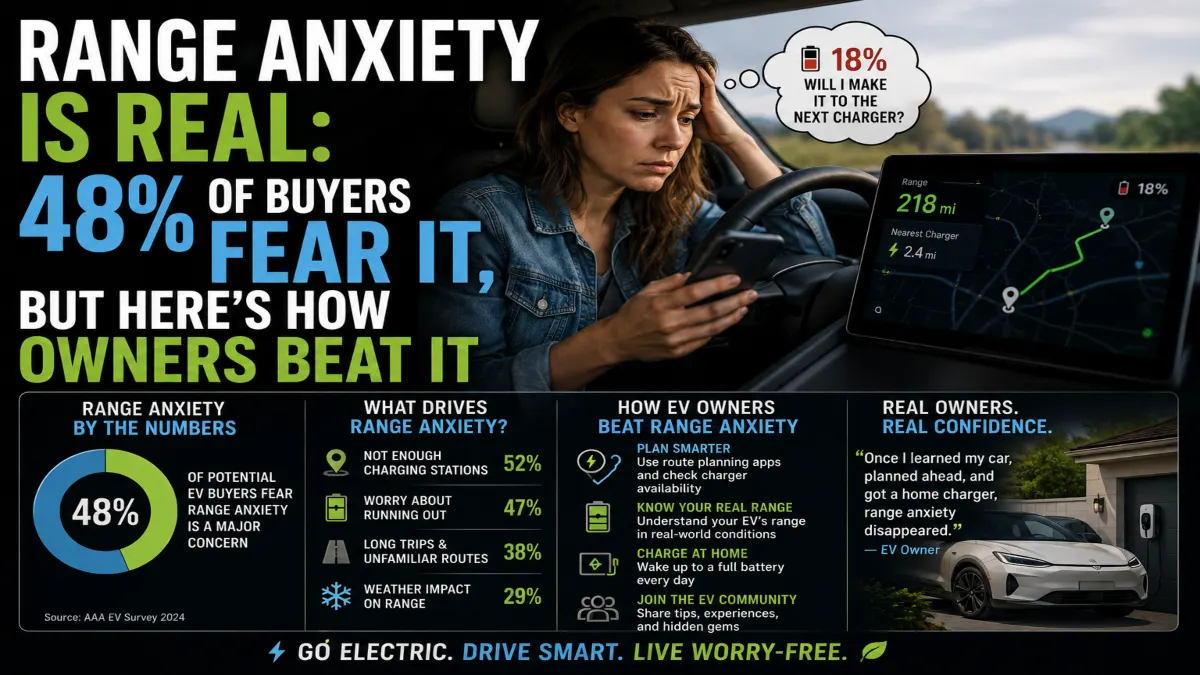
Range Anxiety is Real: 48% of Buyers Fear It, But Here’s How Owners Beat It has become one of the biggest discussions surrounding electric vehicles in 2026. While EV adoption continues growing across the United States, many potential buyers still worry about battery range, charging access, and long-distance reliability. Despite these concerns, experienced EV owners are proving that smart charging habits and improved infrastructure can make electric driving far more practical than many consumers expect.
Range Anxiety Continues to Influence EV Buyers
Many Americans remain hesitant about switching to electric vehicles because they fear running out of battery power during daily driving or long trips. Concerns about charging station availability and charging speed continue affecting purchasing decisions. First-time EV buyers are especially cautious when comparing electric vehicles to traditional gasoline-powered cars. This uncertainty is slowing adoption for some consumers despite rising EV interest.
Modern EVs Now Offer Better Driving Range
Electric vehicles in 2026 are offering significantly better range compared to earlier models. Many new EVs can now travel more than 300 miles on a single charge, making them practical for commuting and road trips. Battery efficiency improvements and smarter energy management systems are also reducing charging frequency.
- Longer battery range capabilities
- Faster charging technology
- Better route planning systems
These upgrades are helping reduce anxiety for everyday drivers.
Charging Infrastructure Is Expanding Rapidly
One of the biggest reasons EV confidence is improving is the rapid expansion of charging networks across the country. Public fast-charging stations are becoming more common in cities, highways, and shopping areas. Home charging systems are also making overnight charging easier and more affordable. Greater charging accessibility is improving trust among potential buyers.
Experienced Owners Adapt Their Driving Habits
Many long-term EV owners say range anxiety fades quickly after understanding how electric vehicles operate in real-world conditions. Drivers often develop charging routines based on commuting patterns and battery management. Smartphone apps and onboard navigation systems also help drivers locate charging stations more efficiently. This practical experience reduces stress over time.
Automakers Are Improving Battery Technology
Automotive manufacturers are investing heavily in battery innovation and charging efficiency. New battery systems are designed to charge faster, last longer, and maintain performance in different weather conditions. Software updates are also helping improve range predictions and energy usage accuracy. These advancements are making EV ownership more convenient in 2026.
EV Ownership Concerns vs Real-World Experience
| EV Concern | Buyer Fear Level | Real Owner Experience | Industry Trend |
|---|---|---|---|
| Running Out of Charge | Very High | Less Common Than Expected | Improving |
| Charging Availability | High | Expanding Rapidly | Strong Growth |
| Long Trip Convenience | Moderate | Easier with Planning | Improving |
| Battery Lifespan | Moderate | Better Than Expected | Positive |
| Charging Time | High | Faster Than Older EVs | Rapid Improvement |
EV Confidence Is Gradually Increasing
Range Anxiety is Real: 48% of Buyers Fear It, But Here’s How Owners Beat It reflects the changing reality of electric vehicle ownership in 2026. While concerns about charging and range still exist, real-world owner experiences and improving infrastructure are helping reduce uncertainty. As battery technology and charging networks continue evolving, EV adoption is expected to grow even faster in the coming years.