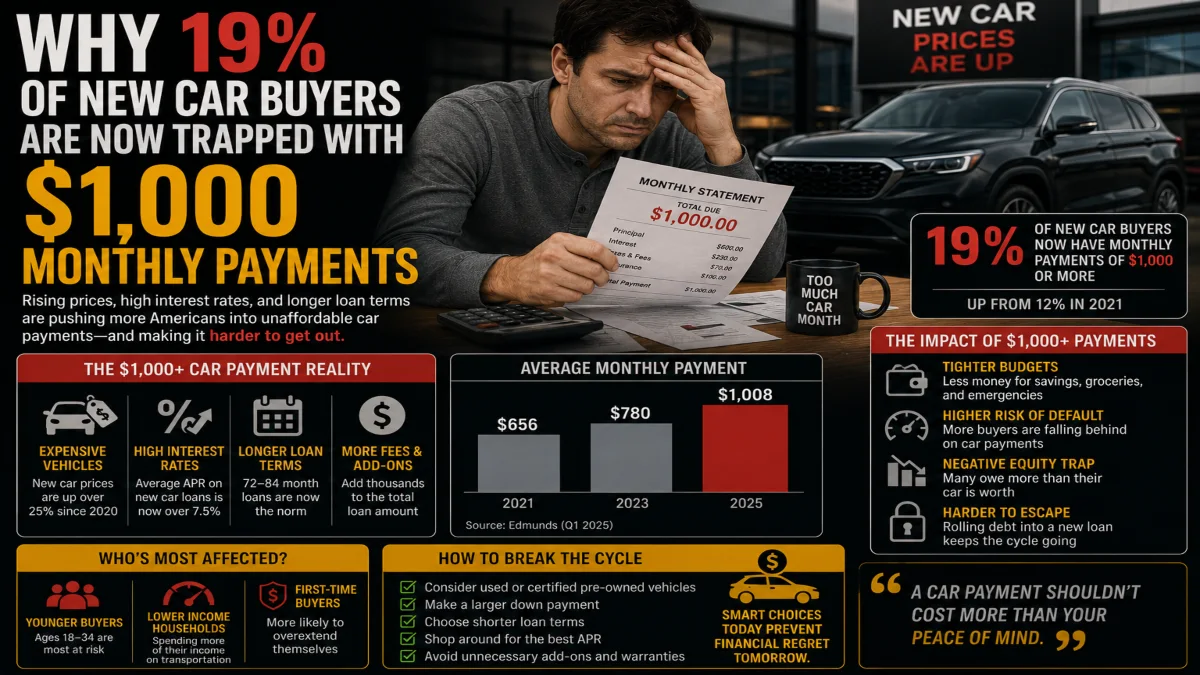
Why 19% of New Car Buyers Are Now Trapped With $1,000 Monthly Payments is becoming one of the biggest financial concerns in the American auto market in 2026. Rising vehicle prices, higher interest rates, and longer loan terms are pushing monthly car payments to record levels. Many buyers who once viewed new vehicles as manageable expenses are now struggling with payments that rival rent or mortgage costs.
Vehicle Prices Continue Reaching Record Highs
New car prices in the United States have increased dramatically over the past few years due to supply chain issues, rising production costs, and demand for technology-rich vehicles. Even entry-level models now carry significantly higher price tags than before. Buyers looking for SUVs, trucks, or electric vehicles are often paying far more than expected. This trend is making affordable vehicle ownership increasingly difficult.
High Interest Rates Are Increasing Loan Costs
Interest rates remain one of the biggest reasons monthly car payments are climbing so rapidly. Buyers financing vehicles over five to seven years are paying thousands more in interest compared to previous years. Even small increases in loan rates can dramatically affect monthly payment amounts.
- Longer financing periods
- Higher total interest costs
- Increased risk of negative equity
These financial pressures are trapping many consumers in expensive long-term loans.
Luxury Features Are Raising Average Vehicle Costs
Modern vehicles now include advanced infotainment systems, driver-assistance technology, premium interiors, and large touchscreen displays as standard features. While buyers appreciate these upgrades, they also increase overall vehicle prices. Many consumers are financing expensive feature packages that significantly raise monthly obligations. This shift is making budget-friendly new vehicles harder to find.
SUVs and Trucks Dominate Buyer Preferences
American buyers continue favoring larger SUVs and pickup trucks despite rising ownership costs. These vehicles typically carry higher purchase prices, insurance premiums, and fuel expenses compared to smaller sedans. Strong consumer demand is encouraging automakers to focus more heavily on premium utility vehicles. This trend is contributing to the growth of $1,000 monthly car payments.
Younger Buyers Face Growing Financial Pressure
Millennials and Gen Z consumers are increasingly struggling to balance transportation costs with rent, student loans, and rising living expenses. Many younger buyers are stretching loan terms to keep monthly payments manageable, even if it increases total repayment costs. Financial experts warn that this approach can create long-term debt pressure and reduce savings opportunities.
New Car Financing Trends in 2026
| Vehicle Category | Average Monthly Payment | Average Loan Term | Market Trend |
|---|---|---|---|
| Compact Sedan | $550–$700 | 60–72 Months | Stable |
| Mid-Size SUV | $750–$950 | 72 Months | Rising |
| Full-Size Truck | $900–$1,200 | 72–84 Months | Strong Growth |
| Luxury SUV | $1,000–$1,500 | 84 Months | Increasing |
| Electric Vehicle | $800–$1,300 | 72 Months | Rapid Growth |
Americans Are Reconsidering Vehicle Affordability
Why 19% of New Car Buyers Are Now Trapped With $1,000 Monthly Payments highlights the growing financial strain caused by rising vehicle costs and expensive financing conditions. More Americans are beginning to question whether new vehicles remain worth the long-term debt burden. As interest rates and prices continue affecting affordability, buyers are increasingly exploring used cars, longer ownership periods, and lower-cost transportation alternatives.